About
Shipped AI at the scale where it has to stay up.
You do not need another transformation narrative. You need someone who has run personalization for a billion users, experimentation platforms at eBay, and AI platform products at NVIDIA — and who will still say when an agent is the wrong answer.
The story
An operator who still builds.
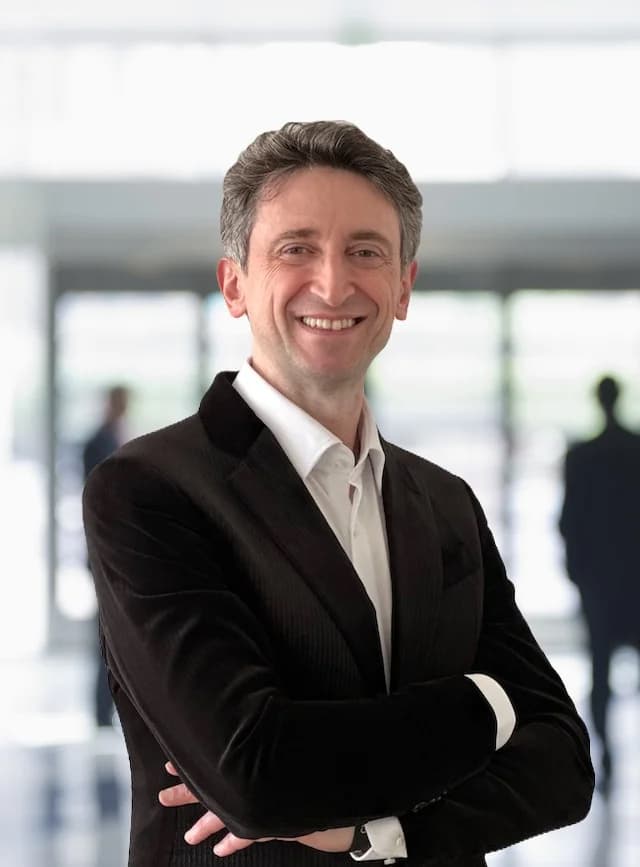
Adnan Boz is an AI practitioner, product operator, and Stanford Continuing Studies instructor. He has been delivering software since 1991 and specializing in artificial intelligence, product, and operating systems since 2011. The through-line is not a title. It is the gap between a demo and a system that has to stay up, stay measured, and stay owned.
At Yahoo he worked on AI personalization and recommendation engines for Homepage, Sports, and Finance — recommendation infrastructure that served more than a billion users. At eBay he worked on AI platform, experimentation platform, and personalization platforms: the machinery that lets teams ship measured change. At NVIDIA he worked on AI platform products for autonomous-vehicle software development, unifying development workflows across simulation, infrastructure, and vehicle deployment.
After NVIDIA he founded AI Product Institute, taught Enterprise AI at Stanford Continuing Studies, and advised companies through Move to AI. He has trained thousands of professionals — not as a classroom substitute for production, but so operators can tell a real path from a slide. He now builds production agents at SaasChing AI in Miami. The last two years were spent building five reinforcement-learning agent engines from the ground up — below the product wrapper, where state, reward, and control decide what an integrator can later ship.
Miami companies do not need to become Silicon Valley. They need someone who has already watched a system look healthy inside the world it was trained for, then fail when the environment's assumptions changed — and who will still say when an agent is the wrong object.
Adnan's accomplishments include:










Trusted by















Some of the companies that purchased AI services.
The path
Where the perspective comes from.
Yahoo: personalization at a billion users
As software architect and later senior product manager, Adnan built AI personalization for Homepage, Sports, and Finance across web, mobile, and international markets. Recommendation infrastructure that large does not survive as a prototype.
eBay: experimentation as an operating system
He led personalization and experimentation platform products — model management, training, inference, and the process that lets teams ship measured change. If you cannot measure it, you do not own it.
NVIDIA: AI platforms for vehicle software
As senior manager of AI platform products in the autonomous-vehicle organization, he unified fragmented development workflows across simulation, infrastructure, and vehicle deployment. That is also where a system can look excellent inside its training world and degrade when the environment's assumptions change.
Teaching, advising, and building agents
He founded AI Product Institute, taught Enterprise AI at Stanford Continuing Studies, and advised companies through Move to AI. At SaasChing AI in Miami he has built five reinforcement-learning agent engines from the ground up, then put production agents on real workflows — architecture, evaluation, controls, and operations.
The difference
How the work is different.
Production experience, not a classroom theory
The work is rooted in shipping AI at Yahoo, eBay, and NVIDIA, then building the engines underneath agents, not wrapping a model in tools. That is how you tell a product-layer workaround from a failure that a prompt cannot repair.
Economics before architecture
Every engagement starts with a process that is already expensive. The question is leverage: improve the work, redesign the workflow, or put an agent on the outcome — and stop when a simpler answer is better.
Hands-on through operations
The deliverable is a guided path into production, not a deck and not a black-box handover. We go deep on the technical work, stay hands-on through operations, and stop when a simpler answer is better.
How the work goes
One workflow. Guided into production.
Bring a process that is already expensive. We will look at the baseline, guide the implementation — improve, redesign, or put an agent on the outcome — and stay hands-on until your team can run it.
If a simpler answer is better, that is the deliverable. The job is operating leverage, not a reason to launch a program.

A useful next step
Bring one workflow. Get guided into production.
We guide the implementation, go deep on the technical path, and stay hands-on through operations — or tell you when a simpler answer is better.
Discuss an AI opportunity